Holi 2026
The Festival of Colours
History
Holi is celebrated on the day after the full moon in the Hindu month of Phalguna (February-March) and marks the arrival of spring as well as the triumph of good over evil. The festival takes its name from the legend of Holika, the demoness who tried to burn her nephew Prince Prahlad, a devoted follower of Lord Vishnu, in a fire - but was herself consumed by the flames while Prahlad emerged unharmed through his faith. This story is remembered on the eve of Holi with Holika Dahan, a bonfire lit to symbolize the victory of devotion and good over evil.
Importance
Beyond the story of Holika, Holi is deeply associated with the playful love between Lord Krishna and Radha, and celebrates the arrival of spring, new beginnings, and the mending of broken relationships. It is a joyful, unifying festival where social barriers are set aside for a day of colour and celebration.
How It's Celebrated
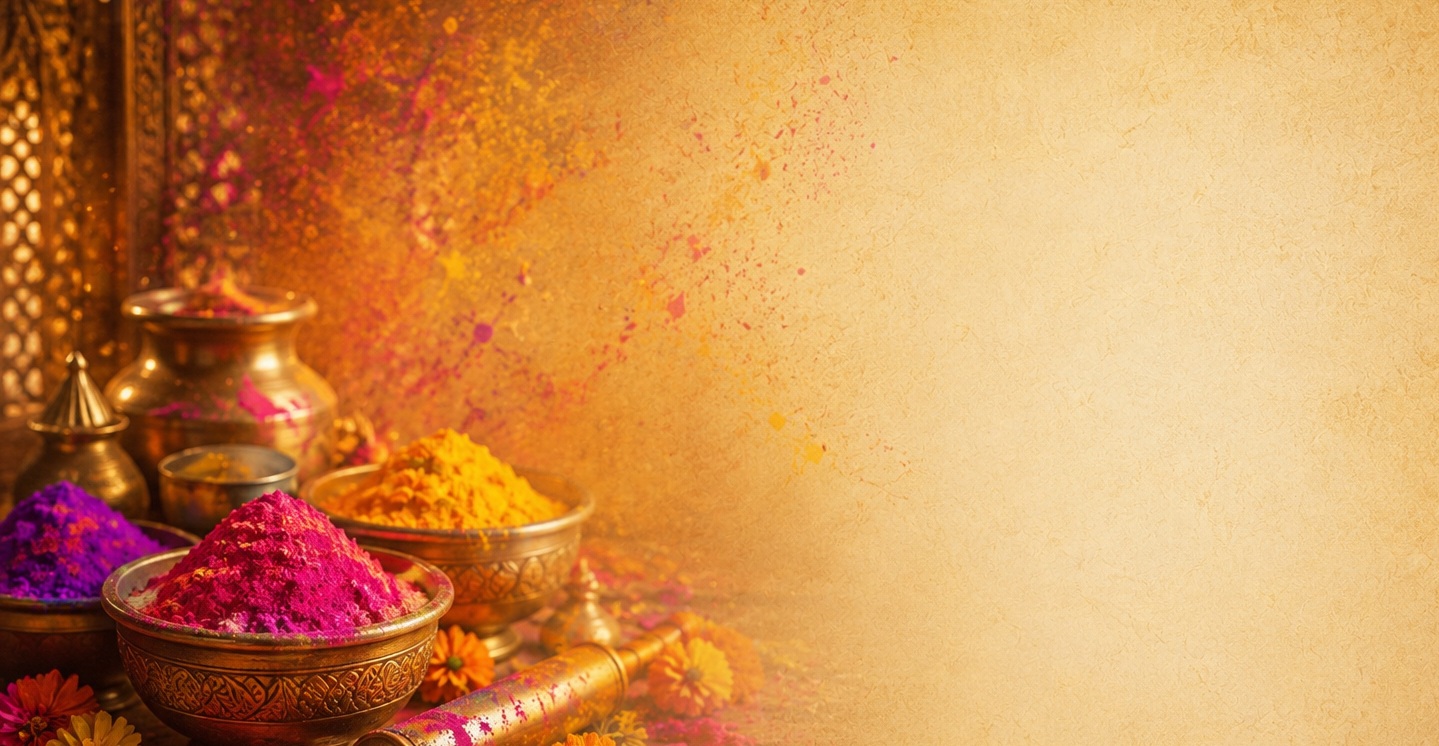
The day begins with Holika Dahan bonfires the night before, followed by a joyous celebration of colours the next morning - friends, family, and even strangers throw coloured powder (gulal) and water at one another, dance to festive music, and share sweets and snacks. It is a day of laughter, forgiveness, and community.
Traditional Foods
Food Story
Festive snacks and sweets are at the heart of Holi celebrations - families share treats like gujiya and malpua with visiting friends and family, and cooling, tangy bites like dahi vada offer a refreshing contrast to the day's colourful energy.
Photo Gallery
Wishing you a Holi full of colour, laughter, and joy. May this festival bring new beginnings and sweetness to you and your loved ones.
Laxmi Catering Special
Celebrating Holi with a crowd? Laxmi Catering can prepare festive trays of sweets and snacks to fuel a full day of colour and celebration - from dahi vada to traditional mithai, we'll help you feed the whole gathering.